Sunday, 8 July 2012
WHY BUY PRINTER CARTRIDGES BY THE BUNDLE /VALUE PACK?


Thursday, 5 July 2012
STORAGE LIFE-SPAN FOR INKJET AND TONER CARTRIDGES
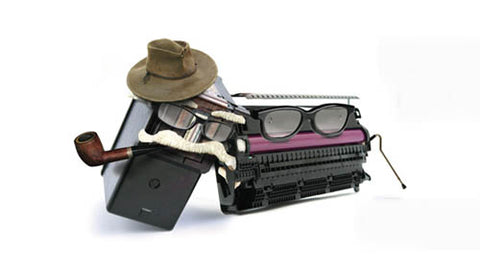
Advice on storage life-span can vary from three months to years. What are the life-spans?
To clarify this article, we are discussing the storage life of cartridges, not the usage lifetime once installed, or yield.
For inkjets and toners, as they use different materials, one liquid ink, the other powder, we are talking quite different storage life expectancies.
Inkjet Cartridges
Inkjet Cartridges, if stored in an upright position, and left unopened, in an area where the temperature remains below 35 degrees Celsius and above -15 degrees Celsius, will store for a longer period than the ‘use by’ date on the box, which is normally two to three years. Not all inkjet cartridge boxes have a use by date, but the cartridge is in a package designed to minimize any evaporation. If after a long period of time, when you do open the packet, and install it, and it doesn’t work, your print head might be blocked, then you can clean it http://www.youtube.com/watch?v=fGKFg0r7CXc . For maximizing the lifespan of your inkjet cartridge when in use go to http://tinyurl.com/8ybeogk
Toner Cartridges
Toner is a dry polymer powder used in laser printers (laser is an acronym for ‘Light Amplification by Stimulated Emission of Radiation’) which is literally melted onto the paper when it passes through the fuser. It won't dry out, and will last indefinitely. However, in high humid conditions, it can congeal. But again, if the cartridge is protected by a sealed package, then storage life for a toner is not really an issue, as the printer’s life span could even be shorter.
We thank our sponsers at ABC Printsupplies along with other suppliers for providing this information.
Wednesday, 4 July 2012
WHERE CAN YOU FIND REVIEWS WHEN BUYING A NEW PRINTER

Your printer is about to pack it in, and you have worked out what type of printer you want i.e Multi functional (print, copy, fax etc.), with colour, and so on. But which brand/model do you buy?
To assist you in that regard, look up this previous blog on what printer should you
get.
Time to check out the internet reviews to get your answers,
but where or how do you do that?
One way is to call up sites that specialise in
reviews, by using different search keywords, such as "printer
reviews" This will provide a fair assortment of different options.
Reviewers will often provide a filter for letting
you advise what you are searching for. The filter determinants can include different
choices such as Brand (Company), Category (Multi-function, copier, inkjet etc),
user favourites Editors Choice...... so there are lots of ways on the better
review sites to determine what printer best suits you.
Remember that reviews are not there to tell you
what to buy, but what are the advantages & shortcomings of each printer
that you look at. You have to make the decision as to what is important to you
and what is not.
And don’t forget that once you have a shortlist of
the printers you prefer, to look up the cost of printer cartridges be they genuine, compatible, or remanufactured to
help you determine the long term cost of that printer.
To help you in your quest, here are a few review pages you might find of interest:
AlaTest Reviews (my favourite)
We thank our sponsers at ABC Printsupplies along with other suppliers for providing this information.
We thank our sponsers at ABC Printsupplies along with other suppliers for providing this information.
Monday, 2 July 2012
WANT TO PRINT FEWER PAGES AND SAVE PAPER AND INK?

How to save on paper, ink and printer costs while helping reduce carbon emissions into the environment.Then you should have a look at 'Greenprint Home Premium', a downlaodable software product. There is a 32 bit & a 64 bit version.One user reviewed it as", Works GREAT on my XP Home system, saves a bunch of ink and a ton of paper that would be wasted without it. Also saves time, since I don't have to wait while things I don't want or need are printed." We can't vouch as to whether this was an interested party or not. Greenprint previews your print jobs for you, removing the unneccessary pages such as images and pages with no text before printing, enabling you to print a lot less pages, depending upon your application. It can also be used to create PDF files form the pages instead of printing them. The PC World Editorial Review of 'Greenprint Home Premium' advises it is easy to use and that you instal it as a printer driver, and when you want to print, choose it on your printer driver. You then get a preview of all your pages where you can remove the graphics, text, and entire pages. When you're done, tell it to print. In bringing this product to your attention we do not necessarily recommend it, and we would advise you to use the free trial version for 30 days before whole heartedly launching into it at a price of $29.00. To download Greenprint Home Premium, click here. We thank our sponsers at ABC Printsupplies along with other suppliers for providing this information. |
Sunday, 1 July 2012
GETTING THE MOST OUT OF YOUR INKJET CARTRIDGE

We thank our sponsers at ABC Printsupplies along with other suppliers for providing this information. |
Thursday, 28 June 2012
BORING HOLIDAYS FOR THE CHILDREN? COMPUTER DRAWING IS THE ANSWER

"Mummy - I'm bored!" The school holidays are happening, but the children have nothing to do.
If you have a computer, and a printer with colour cartridges, then there is a solution.You might have to learn this free drawing application yourself to show the kids how, but the free time to do other things will justify your return many times over. Happy children means a happy home.
This game is simply called 'Drawing for Children', (click on this link to go to the web page) and it's easy to instal. Did I mention that it's free? It works like a kiddies' photoshop, but oh so simple to use. Just be ready for their printed portrait of you.
Not only does it help further familiarize your children with computer usage, but it also feeds their creative abilities, and it makes them think, and enjoy. And its something you can share with them.
We thank our sponsers at ABC Printsupplies along with other suppliers for providing this information.
Wednesday, 27 June 2012
WHY PRINTERS ARE IMPORTANT TO HOME USERS

Monday, 25 June 2012
CARTRIDGE FAILURE OR PRINTER PROBLEM?

Getting poor quality print outs from your inkjet/toner printer? Is it the cartridge or printer maintenance to blame?
Are you seeing smudges on the paper, colours mixing, or missing sections? Then it could pay you to have a look at the maintenance of your printer,Here are some things you should regularly do to maintain good printer quality:
– Use your inkjet printer regularly
When your printer is left unused for long stretches of time, the ink in the print head and nozzles can dry and cause printing flaws such as jagged lines and incorrect colors. To prevent this, use your printer frequently, even if just a page of printing.
– Perform nozzle checks
If you leave your printer unused for a long period of time, you should perform a nozzle check before you use it again. This will make sure your printer prints normally. The nozzle check can often be run thorough your printer’s utility function. Look at your printer’s user manual for specific directions.
– Clean the print heads
If your nozzle is clogged, cleaning the print heads should fix any poor print quality issues. Cleaning utilities come with your printer drivers. Some printers even have a print head cleaning button on their control panel. Your printer’s user manual will have specific directions.
– Align the print heads
If your printouts have vertical lines or horizontal bands this generally means that your print head needs to be aligned. This utility can be found with your printer drivers or in your printer control panel. When you align the print heads, the printer will print a pattern on a piece of paper. You then follow prompts from your printer to adjust the pattern. Specific information for performing a print head alignment can be found in your printer’s user manual.
– Replace your inkjet cartridges
Flawed printouts can often be caused by cartridges that are low on ink. Your printer will prompt you when a black or color cartridge reaches a certain level of ink. Printer manufactures say you should replace your cartridge when you receive this warning because print quality will suffer if you don’t. When replacing your printer cartridges, be sure your purchase the correct replacement cartridge ( check the printer models on the cartridge box or from the web page) and install it as the supplied instructions or your printer’s user manual directs. Incorrect installation can cause more flawed printouts.
– Turn your printer off (the correct way)
Leaving your inkjet printer on for extended periods of time can cause clogged nozzles and flawed printouts. After you finish using your printer for the day you should turn it off using the printer’s own power button. In most printers, the power button initiates a process that seals the print head from outside air, preventing clogged nozzles. If you unplug your printer, or turn it off using a power strip, the print head sealing function may not run.
Alternatively, to check your cartridge, insert an alternative one, if it prints well, then contact your supplier to replace the malfunctioning one. But remember, cartridges don't last forever - if it is over 3 months since you've received it, or experienced abnormal temperature conditions, then discard it as the supplier is unlikely to offer replacement.
We thank our sponsers at ABC Printsupplies along with other suppliers for providing this information.
Sunday, 24 June 2012
TIME FOR A NEW PRINTER, WHAT SHOULD YOU GET?

The questions you should ask yourself before making a decision on the best printer for your usage.
There are many features and options available to you when buying a new printer, that if answered correctly, should enable you to buy the most suitable printer to your needs. And not necessarily the most expensive.
So ask yourself these questions:
- What category of printer is required? There are three categories to chose from:
1) General Purpose or Special Purpose – The vast majority of printers on the market are general purpose (they are good for doing a little bit of everything). Special purpose printers are designed to do specific things (photo printing, document printing, label printing). Figure out what purpose you need your printer to serve.
2) Home Use or Office Use – Where will you be using your printer? Home use printers are more likely to print photos. Office users will focus on printing text. Maybe you are a home office user. If so, geta multifunction printer.
3) Laser Printer or Inkjet Printer - Laser printers are designed for text heavy printing. Inkjet printers are better for photos and graphics. What you print will determine what you need.
- Do you need to print in color?
If the answer is yes, you are probably leaning toward an inkjet printer. If you answer no, then find yourself a laser printer. - Do you need a single function or multifunction printer (MFC or MFP)?
If all you want to do is print, go with a single function printer. If you would like the option to make copies, scan documents/images and fax, you are going to need a multifunction printer. - What kind of print quality do you need?
Print quality differs by the type of printer. Check the print quality for text, graphics, and photos separately. Just because a printer prints high quality text does not mean it will print high quality graphics and photos. Find a printer that produces high quality results for what you print. - How much speed do you need?
If you are the sole user and you typically print 1-2 pages at a time, you probably don’t need a printer with a lot of speed. If you are printing individual documents with many pages, or share the printer with a number of people, you are going to want a printer with a high print speed.
- How much do you print?
Make sure you check the printer’s monthly duty cycle.The duty cycle the manufacturers recommended number of pages you should print each month. Each printer has a different duty cycle. Printing in excess of this number may cause your printer to wear out faster.
- How are you going to connect?
In addition to USB ports, most printers now allow you to connect via an Ethernet connection or Wireless connection. The advantage of Ethernet and Wireless is that they allow you to add your printer to your home network. You can link all your computers to a single printer.
- How much does it cost?
Be sure to check the total cost of ownership for any printer you are thinking about purchasing. You’ll pay a certain amount for the printer when you buy it, but remember you are going to need to buy cartridges in order to continue to use it. To get the total cost of ownership, calculate the cost per year for each kind of output (monochrome, color document, photo) by multiplying the cost per page for that kind of output by the number of those pages you print per year. Add the three amounts together to get the total cost per year. Then multiply that by the number of years you expect to own the printer, and add the initial cost of the printer. Compare the total cost of ownership figures between printers to find out which printer will be cheapest in the long run. More on this at a previous article.
Additional information on what printer to get can be seen on a video from PC World
We thank our sponsers at ABC Printsupplies along with other suppliers for providing this information.
Thursday, 21 June 2012
HOW TO DISPOSE OF USED PRINTER CARTRIDGES

How do you get rid of those used printer cartridges in an environmentally friendly way (e-waste recycling)?
This is becoming a more vexing problem for business and householders as they dispose of MANY MILLIONS of printer cartridges each year - mostly ending up in land fills with long term environmental issues (scary for future generations - bequeathing them a dump). Plastic is a material that nature finds particularly difficult to decompose taking an extremely long period of time. so alternative uses need to be found for them.
One alternative use is remanufacturing of the cartridges, and this is becoming more evident with companies turning profitability from reproducing high quality toner & printer cartridges.
Another alternative use is to break down the cartridges, using the componentry in other industries.
But where can you dispose of the cartridges?
The good news is that organisations are putting their clout behind solving this problem. They call it e-waste recycling and it makes a lot of sense. Look up keywords like 'recycling printer cartridges' or 'printer cartridge collection'on your favourite search engine site ( Google, Yahoo, Bing etc.)
To help the environment in another way, especially if you are a business, create a disposal box on your premises, and only take it to a disposal centre when it is full. That way you are not using as much fuel in transportation - and fossil fuel consumption creates carbon emissions.
We welcome other parties using this article to spread the good word.
We thank our sponsers at ABC Printsupplies along with other suppliers for providing this information.
Wednesday, 20 June 2012
THE REAL COST OF YOUR PRINTER PURCHASE
You're buying a new printer and you want to know what gives you the best bang for your buck.

Taking away factors such as print speed, and quality of print ( for genuine recognized brands, are nearly always high ), which can otherwise be important considerations for you, the most important consideration in purchasing a printer is its total cost i.e. price plus running costs over a period of its lifetime, say 3 years.
Running costs do matter, and a printer with a lower cost per page isn't necessarily going to be cheaper in the longer term. To find out which printer is the best buy, you need to compute the total cost of printing over the printer's lifetime.
In undertaking your comparisons, make sure that the printer cartridge usage yields you use are from reliable suppliers where the yields are measured in terms of the International Organization for Standardization (ISO).
Remember that cartridge prices are irrelevant unless you also know how many pages the cartridge will print. Focus on the cost per page, not the cost per cartridge. Estimate the number of pages you print per month, both in monochrome (black), and in colour. In printer usage colour also uses the black cartridge.
Following is a table that will assist you in determining what total printer costa are to you:
PRINTER | PRICE | COST PER PAGE | RUNNING COSTS PER MONTH | TOTAL COST PER MONTH | 3-YEAR RUNNING COSTS | TOTAL 3-YEAR COST | ||
MONO | COLOUR | MONO | COLOUR | |||||
Tuesday, 19 June 2012
CALIBRATING PRINTERS BY BROTHER

How to Prevent Print Defects in DCP9040CN, DCP9042CDN, HL4040CN, HL4050CDN, MFC9440CN, MFC9450CDN, and MFC9840CDW printers by Brother
Due to variations in temperature and humidity, any newly installed cartridge (TN-150, TN155) in the Brother DCP9040CN, DCP9042CDN, HL4040CN, HL4050CDN, MFC9440CN, MFC9450CDN, and MFC9840CDW printers, whether new OEM (original equipment manufacture) or remanufactured, can produce density defects if the printer is not calibrated.
Failure to calibrate after cartridge installation can result in light print or over saturated dark print caused by colours not being properly matched. Dumping can be caused by over saturation or by over development of toner.
SOLUTION
To achieve optimal colour density for each colour it is recommended that a manual calibration be performed on the printer at the time of cartridge installation.
To manually calibrate:
- Press the + or - key to choose Colour Correction, Press OK,
- Press OK when printer window displays Colour Correction.
- Press OK when printer window displays Colour Calibration. Then calibrate.
- Press OK again when printer window displays Calibrate OK?
- Press the + or - key to choose Colour correction. Press OK.
- Press OK when printer window displays colour correction. Colour Calibration
- Press the + or - key rto choose Reset. Press OK when the printer window displays Colour Calibration Reset.
- Press OK again when the printer window displays Reset OK?
We thank our sponsers at ABC Printsupplies along with other suppliers for providing this information.
Monday, 18 June 2012
PRINTER CARTRIDGE COLOURS

If you are into printing, at home or work-wise, then everything. So what are they?
There are four colours used by printers - black, cyan, magenta, & yellow. They can be either ink or toner. Some printers will offer additional colours e.g. red, green, photo black etc, but of the four colours first mentioned, they can combine to form any other colour.
BLACK
The black colour can be defined as the absence of all other colours. The reason that something seems to be black to the eye is that no visible colours are reflected back.
Black can be printed by combining 100% of the three other colours, Cyan, Magenta & Yellowcolours (in which case a black cartridge is not needed). In fact with many printers, if your black expires, the colours will automatically take over to print in black, which is an expensive way to print as they normally are far more costly than the black. Also producing black by combining colours has its drawbacks & can create a colour closer to a brown or gray.
CYAN
Cyan is also called process blue and is one of the subtractive primary colours used in the C,MY9K) colour model. The Cyan colour is predominantly blue with some green in it.
MAGENTA
Magenta is also called process red and like Cyan is one of the subtractive colours used. The magenta colour is greenless and is predominantly redwith some blue in it.
YELLOW
Yellow is one of the subtractive primary colours used in the CMY, and CMYK colour models. The yellow colour is blueless meaning that it absorbs all wavelengths of blue from light.
The cyan, magenta , and yellow individually are normally inserted as a cartidege into the printer, or as a combined cartridge of cyan, magenta & yellow. They never form a combination with the black.
We thank our sponsers at ABC Printsupplies along with other suppliers for providing this information.
Saturday, 9 June 2012
SOME REASONS WHY YOUR PRINTER CARTRIDGE IS NOT WORKING PROPERLY

Sometimes, your printer just won't print properly. You press the 'print' button and your report printout is not very clear. The printout, in fact, is faded, as though you are running out of ink/toner.
But you know the cartridge is nearly full - you only used it last month to print out that recipe.
So you think it is defective.
Before you phone the supplier to demand a replacement/refund, it could pay you to check the printer head. The chances are it is clogged with dried ink/toner or dust. The problem is solved by cleaning the head of the printer. Find your printer manual on how to do this, along with other troubleshooting hints if the printer is not performing.
You find that you are not printing even though the printer screen advises you have a percentage still to use. There is in the cartridge residual ink/toner. Like toothpaste in a tube it can't be accessed. This combined with toner dust (toner remains) will effect the reading on your printer so as you think you have say 20% usage remaining but in reality you are out of ink/toner.
Another reason your printer is not printing properly (or suddenly at all after just recently installing it) is that you might not have removed the seal or tab protecting the ink from dispersing during travel.
The manufacturer will allow a minimum of usage for test purposes without the seal/tab being removed, which falsely lets you believe the cartridge is operational.
And if you think that the quality of the print is inferior, check the printer settings. For example in Microsoft Windows under print preferences you have different print quality choices including high, standard, fast, & custom. If the setting is on 'fast' you won't have the same quality of print as 'high'.
We thank our sponsers at ABC Printsupplies along with other suppliers for providing this information.
Thursday, 7 June 2012
INK & TONER CARTRIDGES - WHAT ARE THEY?
Printer cartridges come in different shapes & sizes, but all have a common purpose.
And that purpose is to store a substance (ink or toner powder), which is supplies on demand to the computer with which the cartridge is coupled. Think of a baby (printer) & a mother (cartridge), supplying milk (ink, toner) on demand.
INK CARTRIDGES

Inkjet (Ink) cartridges vary in size & shape, from the size of a matchbox to a DVD cover.
They can vary in what quantity they contain from 2.5ml for the Canon BCI11BK Black cartridge to 330ml for the Canon BCI1431BK Wide Format cartridge, although the majority are in the 14 to 18 ml range.
TONER CARTRIDGES
 Toner (laser) cartridges are more usually expressed in pages of yield and vary between say a minimum of 1,000 pages for the Dell 592-11451 cyan cartridge to a massive 47,000 pages for the Canon TG29, GPR19 copier cartridge.
The toner printer cartridges normally have greater capacity than the Inkjet cartridges and are more office accentuated while the latter is more often for home usage.
Many offices though do use Ink cartridges, especially smaller businesses.
We thank our sponsers at ABC Printsupplies along with other suppliers for providing this information.
And that purpose is to store a substance (ink or toner powder), which is supplies on demand to the computer with which the cartridge is coupled. Think of a baby (printer) & a mother (cartridge), supplying milk (ink, toner) on demand.
INK CARTRIDGES

Inkjet (Ink) cartridges vary in size & shape, from the size of a matchbox to a DVD cover.
They can vary in what quantity they contain from 2.5ml for the Canon BCI11BK Black cartridge to 330ml for the Canon BCI1431BK Wide Format cartridge, although the majority are in the 14 to 18 ml range.
TONER CARTRIDGES

The toner printer cartridges normally have greater capacity than the Inkjet cartridges and are more office accentuated while the latter is more often for home usage.
Many offices though do use Ink cartridges, especially smaller businesses.
We thank our sponsers at ABC Printsupplies along with other suppliers for providing this information.
Monday, 4 June 2012
HOW TO MAXIMIZE PRINTER CARTRIDGE USAGE

Do you want to get the most usage from your printer cartridge?
There are ways to get more ink or toner yield from printer cartridges, whether genuine , remanufactured , or compatible.
So save money buying print cartridges by following these handy tips:
1) When the cartridge appears to have expired, take it out & give it a firm, but not too vigorous shake, say half a dozen times, reinstal it and you could further usage.
2) Purchase more than one cartridge at a time if via the internet, involving couriers, and save on delivery costs. Most supplers will only charge a one-time fee (incl. ABC Print Supplies).
3) If you do have cartridges in storage, then on a regular basis (say monthly).., shake them in their packaging (NOTE: Do not open the packaging until you use them).
4) If you don't need colour for your printing, although you have coloured cartidges installed, then use grayscale in the print instructions & leave this mode as default.
And don't forget, yield is approximately 5% of an A4 page (roughly a normal paragraph). Check out our previous blog post on yields @ http://inksupplyguy.blogspot.com.au/2011/08/page-yield-and-performance.html
We thank our sponsers at ABC Printsupplies along with other suppliers for providing this information.
And don't forget, yield is approximately 5% of an A4 page (roughly a normal paragraph). Check out our previous blog post on yields @ http://inksupplyguy.blogspot.com.au/2011/08/page-yield-and-performance.html
We thank our sponsers at ABC Printsupplies along with other suppliers for providing this information.
Wednesday, 23 May 2012
SEALING ON THE LASER TONER CARTRIDGE

When you, the consumer, open your internet ordered new or remanufactured printer cartridge, be it genuine or compatible, one of the first things you should do after jumping for joy because it has arrived so punctually, is to check that the seal to the cartridge is in place.
If there is no seal the quality of that toner/inkjet is compromised. Think in terms of when you open a jar of tomato paste you purchased from the supermarket. If there is no click of the seal decompressing, you will probably have nothing more to do with it, especially if it looks mouldy inside.
The standard shipping seal is located between the magnetic roller and the toner hopper, and is a very thin material mostly inside the cartridge, with an end sticking out that has a pull tag.
Its purpose is to retain the toner in the hopper so no toner can leak into the magnetic roller cavity causing toner leaks during transit.
The magnetic rollers are preloaded with toner for testing and if the seal is not pulled you will be able to print 2-3 pages of quality prints before it displays the same issues as an empty cartridge.
So don't forget to remove the seal by pulling on the tab.
Sometimes a seal is accidentally removed or not installed correctly - which you may see straight away on opening it as there may be some toner leakage in the packaging.
For how to remove sealing tape from a toner cartridge (and other cartridge clues), there is an useful article at eHow tech
We thank our sponsers at ABC Printsupplies along with other suppliers for providing this information.
PRINTER CARTRIDGES - WHY YOU GET WHAT YOU ORDERED

And why is that? Well probably because there is very little human interactivity to stuff it up.
The customer places his order from a website. He enters the printer/cartridge oem/sku (supplier code) and the product is displayed in detail. He then clicks on add/purchase etc and goes through the buying routine.
At the end of the day, whatever time close off is, the system will automatically produce a CSV spreadsheet with all the correct printer cartridges that is passed on to the warehouse.
The warehouse can then automatically pick those products (electronically from the shelf), and produce a picking label with the address as supplied by the customer. Wrong address equates to a customer error, which does happen (human interactivity).
As the orders go to dispatch, a computerised weighing system checks that what the error purports is correct weight-wise.
The customer then receives his order, and if he tries a bit of trickery by complaining about his cartridge only being 60% full, there is that weight record.
With so much similar coding for printer cartridges, and over 4,000 different products in the total range, the system generally works very well for getting the order right
We thank our sponsers at ABC Printsupplies along with other suppliers for providing this information.
With so much similar coding for printer cartridges, and over 4,000 different products in the total range, the system generally works very well for getting the order right
We thank our sponsers at ABC Printsupplies along with other suppliers for providing this information.
Tuesday, 15 May 2012
ARE PRINTERS BECOMING CHEAPER TO BUY THAN PRINT CARTRIDGES?

Customers are finding cartridges more expensive than the cost of a new printer - true or false.
There certainly are situations where it can be less expensive to puchase the printer again rather than buying replacement cartidge(s). This is more applicable if it is necessary to acquire the black, cyan, magenta , & yellow cartridges.
However, the brand names such as Brother have become aware of this and consequently provide a cartridge which will have only say 40% of the toner that their replacement cartridges have.
The problem with customers repurchasing printers to get the cartridges free (included in the price of the printer), is that you can end up with a store room full of unused printers, an environmental disaster in the making.
If genuine cartridges are too costly, an alternative can be to swap your cartridges for refills, or purchase compatible or remanufactured cartridges.
For your genuine/remanufactured/compatible printer cartridges, check out our sponsors, ABCprintsupplies.
Thursday, 3 May 2012
COMPATIBLE CARTRIDGE MANUFACTURERS SHOULD IMPROVE THEIR MARKETING

End users are often confused by packaging identification & different size cartridges to the originals.
We are getting feedback about customers who order compatible cartridges on the internet, upon receiving them and opening the outer package, find a product code that is nothing like the printer OEM model (e.g. TN2250) they ordered. It will instead read as something like FN2366483, which is an international code.
They are concerned that if they open the box & it's not what they ordered, that the internet supplier won't replace it.
Manufacturers, the customer doesn't need this. Can't you, or the wholesaler at your recommendation, insert a label with the model(s) the cartridge is used for.
Also, copyright laws are making it such that there a 25+% difference is required in the physical shape of the compatible to the original. Possibly a note to this effect would make life easier for retailers & customers, along the lines that although the shape is different, the quantity/quality of the product is not effected.
Compatible manufacturers, you've improved your act over time with the quality of your product. It's now time to improve your marketing - get to it!
We thank our sponsors at ABC Printsupplies along with other suppliers for providing this information.
Subscribe to:
Posts (Atom)